
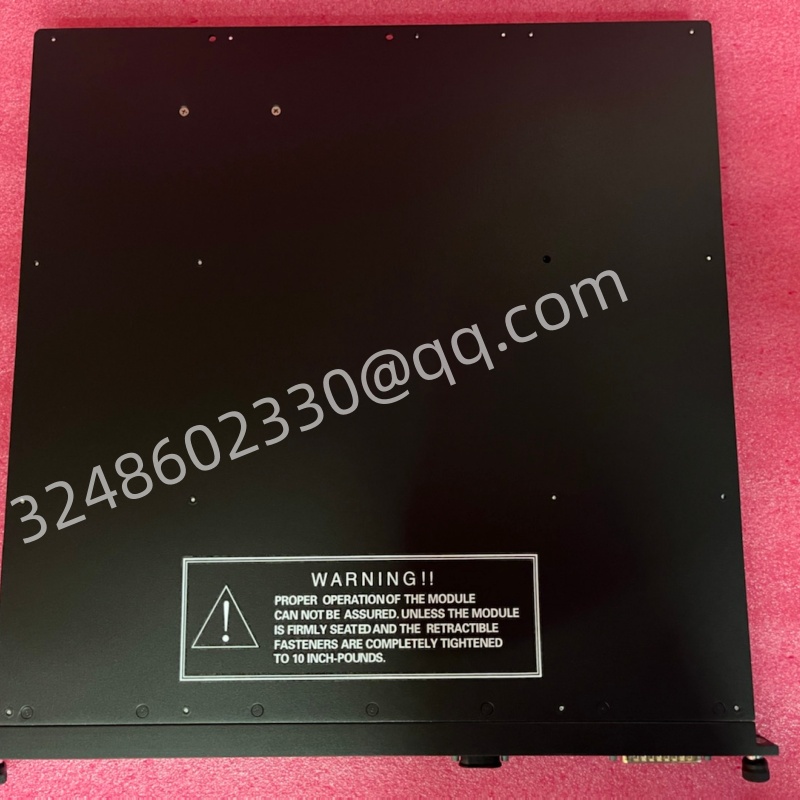
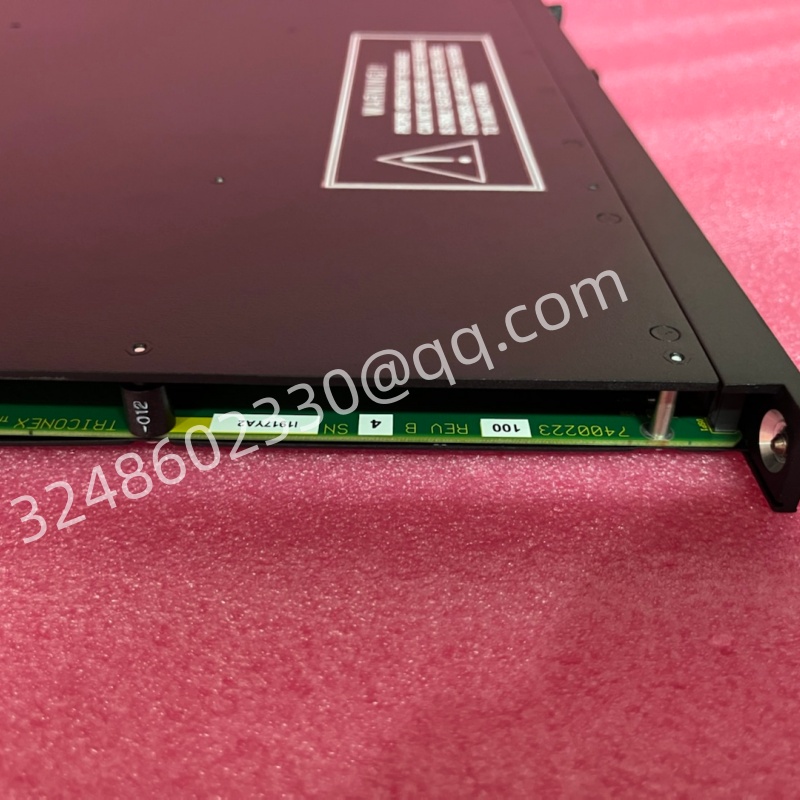
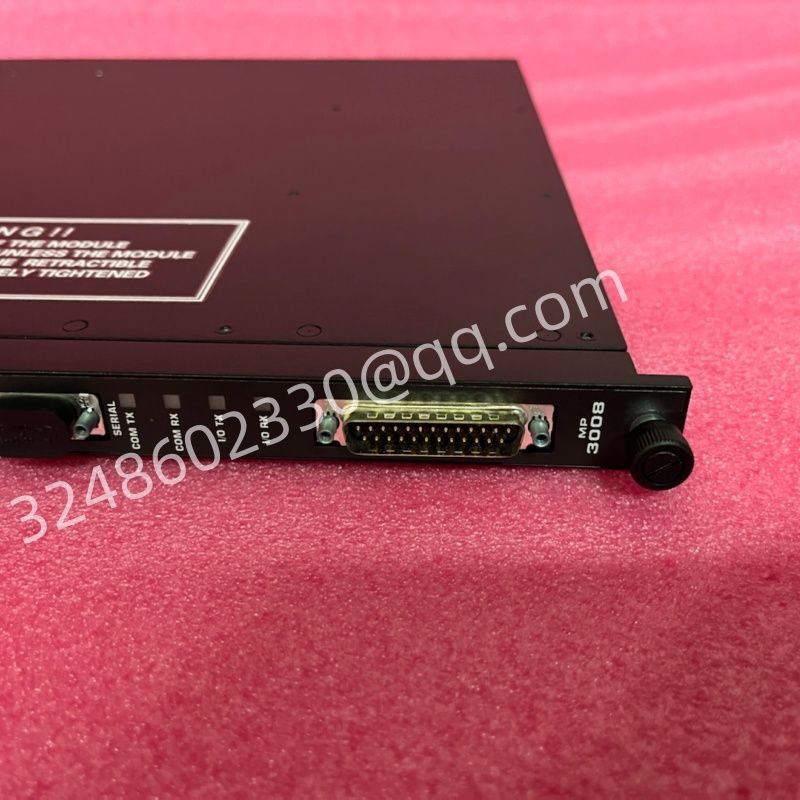

TRICONEX 3008 processor module
product description
The TriconeX 3008 (also known as MP3008) is the core main processor module of the Tricon Safety Control System (SIS) under the umbrella of Avis/Schneider. As the “brain” of the whole the third mock examination redundancy (TMR) system, it is specially designed for critical safety applications such as emergency shutdown system (ESD) and process interlocking, and conforms to IEC 61508 SIL3 safety integrity level standard.
The following is a detailed analysis of the processor module:
1. Core architecture and working principle
Triple TMR architecture: Each Tricon host rack must be equipped with three 3008 main processors (MP). They communicate and synchronize with each other through a high-speed fault-tolerant internal bus (TriBus). Each processor independently runs control programs, reads input signals, and performs calculations, ultimately outputting results through a hardware majority voting mechanism to ensure that a single point of failure does not affect the overall safe operation of the system.
High performance microprocessor: using Motorola MPC860A 32-bit microprocessor, with a clock frequency of 50MHz, and equipped with floating-point coprocessor, supporting real-time logic operations and complex control algorithms.
Independent I/O communication: Each MP has a dedicated I/O communication processor to manage data exchange between it and I/O modules, reducing the load on the main processor.
2. Memory and storage specifications
DRAM (User Memory): Equipped with 16MB DRAM, it is used to store user written control programs, SOE (Sequence of Events) data, I/O data, and diagnostic buffers.
SRAM/NVRAM: Equipped with 32KB SRAM/NVRAM, protected by backup batteries on the rack backplane. In the event of external power failure, the integrity of the program and variables can be maintained for at least 6 months.
FLASH PROM: Built in 6MB FLASH memory.
3. Interface and Communication Capability
TriBus bus: Provides up to 25Mbps TriBus communication speed, enabling data synchronization between MPs, DI/AI voting, and DO/AO result comparison.
I/O bus: Provides fault-tolerant I/O bus interface with a speed of 375kBaud, used to connect and manage digital/analog I/O modules.
Network and serial interface: reserve RJ-45 Ethernet port and DB9 Modbus interface; The front panel is equipped with an RS-232 interface (DB25) with optical isolation (500VDC), specifically designed for DiagRead diagnostic analysis.
4. Status indication and self diagnostic function
Panel indicator lights: The front panel provides intuitive status indicators, including PASS (green), FAILT (red), ACTION (yellow), MAINT1, and MAINT2 (red), to help operations personnel quickly identify the health status and synchronization status of modules.
Comprehensive self check: Equipped with a wide range of online diagnostic functions, it can verify fixed program memory, test basic instructions, check CPU handshake signals, monitor I/O communication processors and channel status, etc. It can automatically isolate faulty modules and trigger alarms, and even support automatic repair and transfer of application programs.
5. Maintain features and application areas
Hot plugging and online maintenance: Supports modular design and hot plugging. Due to complete isolation between each Leg, faulty cards in hot standby state can be removed online for replacement without interrupting the process, greatly reducing downtime.
Typical applications: Widely used in safety instrumented systems (SIS) for petrochemicals, refineries, natural gas plants, safety control systems for offshore platforms and LNG terminals, as well as harsh environments with extremely high reliability requirements in the nuclear industry.

Reviews
There are no reviews yet.