
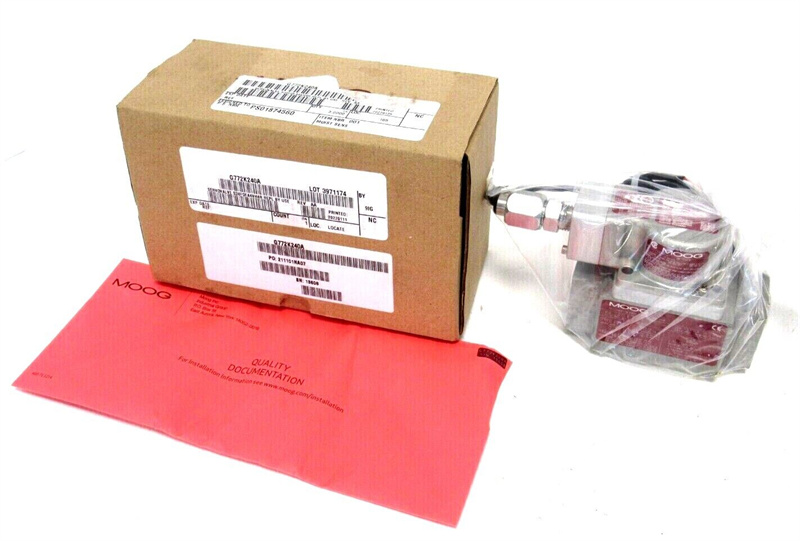


MOOG G772K240A dual nozzle baffle electro-hydraulic servo valve
product description
MOOG G772K240A is a high-performance electro-hydraulic servo valve developed by MOOG Corporation in the United States. As a typical model in the G772K series, it belongs to a two-stage pilot servo valve with mechanical feedback (MFA), which has extremely high precision and reliability in the field of industrial control. The following is a detailed analysis of the product:
1. Structure and working principle
G772K240A adopts a dry torque motor and two-stage hydraulic amplifier structure, and its core components and operating mechanism are as follows:
Pilot stage: using symmetrical dual nozzle baffle valves, driven by dual air gaps of dry torque motors. When the current command signal is input to the torque motor coil, electromagnetic force will be generated to deflect the armature, which will drive the displacement of the baffle in the spring tube and change the pressure drop at the nozzle.
Power stage (output stage): It is a four-way slide valve. The pressure change of the pilot stage will push the main valve core to move, opening the channel between the oil supply port and the control oil port. At the same time, the displacement of the valve core is mechanically feedback through a precision cantilever spring rod, forming a restoring torque to the armature baffle assembly, ensuring a highly linear relationship between the valve core position and the input current.
Balance state: When the electromagnetic torque is balanced with the restoring torque generated by mechanical feedback, the baffle returns to zero position, and the spool valve remains in the open position until the input signal changes.
2. Core technical features
High flow and high dynamic response: The G772K series is designed specifically for high flow conditions, capable of handling larger hydraulic power while maintaining high dynamic characteristics, making it suitable for applications that require fast switching and high-frequency response.
High precision and low hysteresis: With precise grinding technology and mechanical closed-loop structure, this valve exhibits high resolution, extremely low hysteresis, and excellent zero position stability, effectively preventing system drift.
Durable and sturdy: The structural design is simple and sturdy, and the internal filter design makes it highly adaptable to the environment. It can resist the impact of small particle pollution and high temperature fluctuations in industrial hydraulic oil, and has a long service life.
Multifunctionality: Can be used as a three-way and four-way throttling flow control valve, and has better control performance when used as a four-way valve.

3. Main application scenarios
With its outstanding performance, G772K240A is widely used in heavy industry and high-end equipment fields that require strict control requirements:
Electricity and energy: often referred to as “power plant valves”, used for precise positioning of turbine control valves and actuators.
Steel and Metallurgy: Suitable for continuous casting machine vibration table and plate rolling mill pressure control (AGC system), ensuring continuous and stable operation in high temperature and high pressure environments.
Aerospace simulation: Using its high-frequency response characteristics to simulate real dynamic loads in flight simulators and structural fatigue testing machines.
Other industrial fields: precise switching of injection speed and pressure for injection molding and die-casting machines, as well as hydraulic control systems for industries such as petrochemicals, papermaking, and automotive manufacturing.
4. Maintenance and usage suggestions
To ensure the long-term service life and stable performance of MOOG servo valves, the following precautions should be taken in daily use:
Oil cleanliness: Clean oil that meets NAS 1638 level 6 or ISO 4406 level 14/11 or above must be used, and the system must be ensured to meet the standards before installation.
Regularly replace the filter element: Regularly inspect and replace the high-pressure fine filter at the front end of the servo valve (such as the disc oil filter of the pilot valve) to prevent blockage of the pilot stage.
Professional debugging and calibration: It is recommended to use a dedicated testing bench for zero position calibration and dynamic testing, and regularly check the seals to avoid wear and tear that may cause performance degradation.


Reviews
There are no reviews yet.